
Scholarship of Teaching and Learning Series 2026
UNSW staff are invited to participate in the upcoming SoTL sessions. Scroll down to find out more details about each event.


UNSW staff are invited to participate in the upcoming SoTL sessions. Scroll down to find out more details about each event.
Thursday 1 October from 2 - 3pm: Online only (Teams)
Facilitated by by Associate Professor Anna Rowe, Dr Benjamin Phipps, Meredith Macaulay
Feeling stuck with a SoTL idea or project? Join this SoTL Studio, an informal, collaborative drop-in space to help you work through challenges, refine your approach, and build momentum.
Connect with experienced colleagues, talk through challenges, and get practical advice on research design, ethics, writing, and dissemination. No presentations, just conversation, support, and shared problem-solving.
This session is for UNSW staff at any stage of their SoTL journey. Please come along with questions ready for discussion.
Tuesday 6 October from 2 - 3pm: Hybrid presentation
Researching relational pedagogy and educator wellbeing
Presented by Gabi Nudelman
This session shares insights from the published study Relational Pedagogy and Educator Wellbeing: Navigating Care, Identity, and Institutional Conditions in Higher Education (Higher Education Research & Development), alongside a practical look at how this kind of research actually comes together. I will briefly introduce the study and its key findings, focusing on how relational pedagogy shapes educator wellbeing through tensions between care, identity, and institutional conditions.
The main focus of the session is the research journey itself, from an initial “gnawing curiosity” to a peer-reviewed publication. I will unpack the often unseen parts of SoTL work, including how ideas take shape, how research questions are refined, and how to navigate the process alongside everyday academic responsibilities.
The session will conclude with a set of practical principles to help others turn their own teaching curiosities into meaningful SoTL research. It is designed for educators at any stage who are curious about getting started or taking the next step.
About the presenter
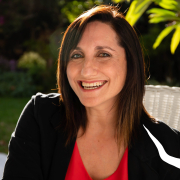
Gabi is a Senior Lecturer in the School of Management and Governance at UNSW Business School. She holds a PhD in Higher Education Studies from Rhodes University, South Africa.
Gabi’s research explores how educational and organisational systems can support more just, humane, and sustainable ways of working and learning. She is particularly interested in professional identity, academic roles, and the ethics of care and kindness within institutional contexts.
As an educator, Gabi teaches in the areas of ethics and sustainability in business, with a strong focus on developing responsible, reflective, and socially aware business professionals. Her teaching is informed by her research and underpinned by a commitment to relevance, equity, and transformation.
Designer Resilience: Preparing Designers and Creative Industries Practitioners for Long, Healthy and Impactful Careers
Presented by Dr Rebecca Price
How do we prepare graduates for careers in a world defined by uncertainty, rapid technological change, and increasingly complex social and environmental challenges? While universities excel at developing disciplinary knowledge and technical expertise, far less attention has been given to preparing graduates for the emotional and psychological realities of professional practice.
Designer Resilience, developed by Arts, Design and Architecture Senior Lecturer Rebecca Price, examines how higher education can cultivate not only capable professionals, but people who can sustain meaningful, healthy and impactful careers. Drawing on six years of educational action research with students, educators and industry partners, this research explores how resilience can be intentionally embedded within design education, generating pedagogical approaches with relevance across disciplines.
Rather than treating resilience as individual toughness, this research understands it as the capacity to navigate uncertainty, learn from challenge, and sustain hope and agency throughout professional practice. This research has resulted in practical educational interventions, including The Resilient Designer's Handbook which has been adopted globally, offering evidence-informed approaches that can help educators prepare graduates not only to solve complex problems, but also to thrive while doing so.
About the presenter

Dr Rebecca Price is based in the School of Built Environment, Faculty of Arts, Design and Architecture at UNSW. Dr Price's research explores how resilience as a psychological construct enriches design education and practice. Through award-winning teaching, funded initiatives, publications, and industry collaboration, Dr Price advances human-centred approaches that support resilient designers and creative industries practitioners to imagine and realise sustainable and just futures.
Tuesday 3 November from 2 - 3pm: Hybrid presentation
Developing Reflective Practice Within Disciplines: From Reflection to Scholarly and Publishable Outputs
Presented by Dr Cherie Lucas, Associate Professor Janis Wardrop, Simon Kozlina, Dr Benjamin Phipps and Professor Susan Thompson
Reflective practice is central to scholarly teaching, but what reflection looks like, and how it becomes a rigorous scholarly method, can vary considerably across disciplines. This panel brings together educators from diverse disciplinary backgrounds, to explore how they use reflection to investigate and enhance teaching, as well as to develop scholarly and publishable outputs.
Presenters will share the disciplinary, theoretical and methodological lenses informing their reflections, demonstrating how reflection can move beyond an individual activity to become systematic inquiry within the Scholarship of Teaching and Learning (SoTL). They will highlight outputs such as reflective vignettes, case studies and practice-based inquiries, and will share examples of where and how they have disseminated or published this work.
The session will conclude by considering how participants can develop their own reflective practices into scholarly projects and identify forms of inquiry and publication valued within and across their disciplines.
Expert panel:
Dr Cherie Lucas, Faculty of Medicine and Health
Associate Professor Janis Wardrop, Faculty of Business
Simon Kozlina, Faculty of Law
Dr Benjamin Phipps, Pro Vice-Chancellor Education Portfolio
Professor Susan Thompson, Faculty of Arts, Design & Architecture
Tuesday 1 December from 2 - 3.30pm: Hybrid presentation
The SoTL Series presents SoTL Soundbites!
Presenters include Dr Pranit Anand, Dr Veronica Smith, Carrol Besseling, Alice Sun, Kalli Spencer, Associate Professor Linda Ferrington, Dr Lisa Gilanyi, Virginia Mawer, Dr Vivian Zhou, Professor Zixiu Guo, Tahmina Akhter, Dr Jiapei Xia, Danielah Martinez.
Welcome by Associate Professor Karin Watson and facilitated by Associate Professor Anna Rowe, Dr Ben Phipps and Meredith MacAulay.
Are you interested in hearing about how UNSW educators are using SoTL to transform teaching and learning? Have you considered presenting your own SoTL work at an international conference?
Come join us in the Teaching Commons to hear from colleagues who presented at this year's HERDSA and ISSOTL conferences. Each presenter will give a brief five-minute snapshot of the main themes of their work, with a focus on practical takeaways you can apply to your own context. Themes include assessment and feedback, the student voice, academic communication, community partnerships, and more!
The event will conclude with afternoon tea and an opportunity to network
For colleagues located on campuses outside of Sydney, the event will be offered in hybrid, so you can join us online.
To view past recordings, please visit SoTL Central:
Tuesday 3 February from 2 - 3pm (Hybrid presentations)
Presentation 1: Exploring student emotions to the study of administrative law
Presented by Associate Professor Anna Rowe, Associate Professor Chantal Bostock and Associate Professor Chien Gooi
This presentation explores the emotional landscape of university students preparing to study administrative law, a topic that has received limited attention beyond general research on law student learning. To address this gap, a research project at UNSW was established to investigate the emotions students reported by students at the start of term and the factors that shaped these expectations, with a view to addressing and mitigating any negative emotions experienced. 166 meaningful responses were received, establishing an evidence-based foundation for examining how emotions may influence engagement with complex legal content. Emotional patterns were largely consistent across cohorts, though international students and those without English as a first language reported higher levels of anxiety and discomfort. Importantly, the study highlights the need for future research to consider cultural and linguistic diversity when exploring student emotions, as these factors may shape both emotional experiences and the ways students articulate them.
Presentation 2: Writing feedback at university: Benefits and impact on students' academic writing literacy
Presented by Dr Neda Chepinchikj
Providing first-year undergraduate students with feedback on their first assessment drafts is invaluable to their academic success and writing skills development. Due to time and resource constraints, external writing support often fulfills this purpose. Based on data from a first-year undergraduate course in Social Sciences, this presentation aims to demonstrate the impact and value of external writing feedback for written course assessments, and how it supports students in developing their writing skills by providing specific constructive feedback. The external writing feedback tool used in this study, Smarthinking, is a human-operated online service, which delivers personalised, ethical formative feedback absent of corrections or editing. We dive deep in the students’ journey from first assessment draft, external writing feedback, final draft and marker’s feedback and assessment grade and follow the developmental changes in the students’ writing as well as their choices in applying or disregarding the feedback. As such, this is a qualitative case study of four students’ assessments using text analysis and thematic analysis, which demonstrates different levels of student feedback literacies through engagement with formative writing feedback and the impact thereof on the quality of their final assessments.
About the presenters

Associate Professor Anna Rowe SFHEA is the Academic Development Lead, Pro Vice-Chancellor Education Portfolio at the University of New South Wales Sydney, Australia. She leads various institution wide capability building initiatives in areas such as Advance HE Fellowships and the Scholarship of Teaching and Learning (SoTL). Anna has published widely in higher education learning and teaching with specific areas of interest including the role of emotions in learning, work-integrated learning, pedagogy, feedback and peer review of teaching.
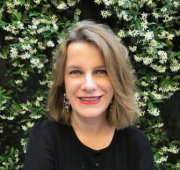
Associate Professor Chantal Bostock is a Nexus Fellow in the UNSW Faculty of Law and Justice specialising in migration and refugee law. She has been a senior lawyer at the Asylum and Immigration Tribunal and the Law Commission in the UK, and a senior lawyer and Tribunal member at the Administrative Appeals Tribunal, Sydney. She is currently a lay member of the Medical Council of NSW.

Chien Gooi is a Clinical Psychologist and an Education Focused Associate Professor in the University of New South Wales School of Psychology. He is the Director of the Master of Psychology (Clinical) program and has strong interests in the development and assessment of psychology competencies, clinical supervision and deliberate practice. In addition, he collaborates with colleagues across discipline on research around scholarship of teaching and learning.

Dr Neda Chepinchikj is a linguist, educator and researcher. Her research focus is on academic writing, multimodal conversation analysis and telecinematic discourse. She is a published author and an Associate Fellow of the Advance Higher Education Academy.
Tuesday 3 March from 2 - 3pm (Hybrid presentations)
SoTL Series: Interviewing Skills: Choosing the right methods for the right research problem
Presented by Benjamin Phipps, Daniela Castro de Jong, Andrew Dymock, & Melody Li
In this session, we explore the use of different interview skills based on a SoTL project investigating perceptions and understanding of teaching practices in Assessment and Feedback. Differences in the use of structured and semi-structured interviews, questioning techniques and collaborative interview strategies will be discussed. Come and pick up some new research strategies for SoTL projects.
Tuesday 7 April from 2 - 3pm (Hybrid presentations)
Classroom to SoTL Impact: Our Journey with Competency-Based Assessment
Presented by Danielah Martinez
Scholarship of Teaching and Learning (SoTL) often begins with curiosity to improve student learning. In this session, I share our journey of implementing Competency-Based Assessment (CBA) in a first-year design course and how it evolved into a research project with international reach. Starting from classroom curiosity, we sought input from colleagues, navigated ethics approval, and analysed student experience data. Our dissemination strategy has included a presentation to Communities of Practice, contributions to UNSW Education-Focused initiatives, a published feature on UNSW Education News, and presentations at both local and international conferences, with further activities planned to extend our scholarly impact. Through this narrative, I highlight practical strategies for moving from teaching practice to SoTL impact, including framing research questions, choosing dissemination formats, and sustaining momentum. Attendees will gain insights into how small steps can lead to meaningful scholarly contributions and how sharing work in different formats can amplify its influence. This session aims to inspire academics to see SoTL as an accessible, iterative process rather than a daunting leap.
About the presenter

Danielah Martinez, Lecturer of Industrial Design and PhD candidate at UNSW, investigates critical and participatory design methodologies to challenge normative practices. Her pedagogy research advances student experience and assessment innovation in design education. She is professionally recognised through participation in design industry discourse, judging panels and is the recipient of international design awards.
Tuesday 5 May from 2 - 3pm (Hybrid presentation)
What makes a good SoTL Poster? Visually communicating SoTL research
Presented by Emma Mills
This presentation guides SoTL researchers through the process of developing visual communication of SoTL that is simple, clear, effective, and appeals to a broad audience, using the framework developed for the Teaching & Learning Inquiry (TLI) Journal poster review. Grounded in research and best practices for scholarly communication (Chick, 2025), the TLI review guidelines suggest that a poster must tell a complete story such that its main message(s) are informative on their own. Distilling scholarly research into an engaging visual narrative, however, can be challenging without design skills and visual communication experience (Gundogan et al. 2016; Schrum 2022). Attendees are encouraged to think visually and expand their communication skills following guidelines grounded in scholarship and design principles. This presentation will support attendees to tell their SoTL story concisely and visually.
About the presenter
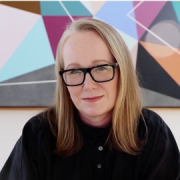
Emma Mills is a Senior Lecturer and Director of Student Experience and Work Integrated Learning (WIL) in the School of Art & Design, UNSW. Leveraging 30 years of industry experience as a Graphic Designer, and running her own Design Agency for 20 years, she has established meaningful professional collaborations, connections, and career pathways for students through her leadership of the WIL program and industry focussed courses. In 2023 TLI began accepting ISSOTL conference poster submissions for peer review and publication. Emma was instrumental in developing peer review guidelines for SoTL poster submissions. The success of this work led to an invitation to join the TLI Journal Editorial team, as a Special Projects Associate.
Tuesday 2 June from 2 - 3pm: Face to Face (Teaching Commons, Kensington Campus)
SoTL Studio: Drop-in Session (60 mins)
Presented by Associate Professor Anna Rowe, Dr Benjamin Phipps, Meredith Macaulay
Feeling stuck with a SoTL idea or project? Join this SoTL Studio, an informal, collaborative drop-in space to help you work through challenges, refine your approach, and build momentum.
Connect with experienced colleagues, talk through challenges, and get practical advice on research design, ethics, writing, and dissemination. No presentations, just conversation, support, and shared problem-solving.
This session is for UNSW staff at any stage of their SoTL journey. Please come along with questions ready for discussion.
Thursday 4 June from 2 - 3pm: Online (Teams)
SoTL Studio: Drop-in Session (60 mins)
Presented by Associate Professor Anna Rowe, Dr Benjamin Phipps, Meredith Macaulay
Feeling stuck with a SoTL idea or project? Join this SoTL Studio, an informal, collaborative drop-in space to help you work through challenges, refine your approach, and build momentum.
Connect with experienced colleagues, talk through challenges, and get practical advice on research design, ethics, writing, and dissemination. No presentations, just conversation, support, and shared problem-solving.
This session is for UNSW staff at any stage of their SoTL journey. Please come along with questions ready for discussion.
Tuesday 4 August from 2 - 3pm: Online (Hybrid Presentations)
SoTL Series: Blogging for Success
Presented by Sharon Aris, Chris Campbell, Cherie Lucas, and Diana Turnip
Blogging for success is a practical 60-minute workshops designed to help educators turn their teaching innovations into engaging, publishable blog posts that build profile, impact, and scholarly identity. Drawing on the Scholarship of Teaching and Learning (SoTL) framework this session positions blogging as a fast, visible, and influential form of scholarly output within the broader SoTL ecosystem that includes practice notes, journal articles, and public scholarship.
In this workshop participants will explore how blogging can drive high engagement, development of an authentic voice, and create timely outputs from existing work and will examine key higher education platforms such as Nexus, HERDSA Connect, ASCILITE TELall, ISSOTL. We will unpack the “anatomy of a blog post,” including crafting a compelling title and lead, structuring with clear headings, integrating evidence, and call to action.
In three short writing sprints participants will create a first draft for their own blog post based on their own teaching innovations. The workshop concludes with participants having an identified blog site for publication and an editing plan for their blog.
About the presenters
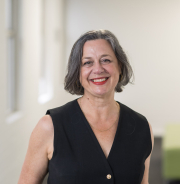
Dr Sharon Aris is a sociologist who has worked across a variety of tertiary institutions teaching social research and analysis and developing curriculums and instructional design. She is deeply interested in who succeeds in education, how and why. In research she explores how different knowledges are produced and successfully transmitted in education and through families. Her recent scholarship has focused on understanding the impact of AI in government and the social sciences and what this means for teaching the social sciences, and supporting the future career destinations of social science students.

Dr Chris Campbell, PFHEA, is the Nexus Fellow at UNSW Canberra. Chris engages with staff in innovative learning and teaching. Her research area is in educational technologies to improve student engagement, particularly in online learning. Chris was the President of ASCILITE from 2019-2023, leading the society through the pandemic and beyond.
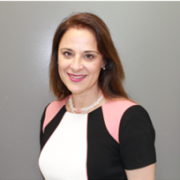
Dr Cherie Lucas is a Nexus Fellow at the School of Population Health, Faculty of Medicine and Health. She has led Q1 journal publications in SoTL research methodology and published >100 SoTL journal articles and scholarly blogs. She resides on 6 International Editorial Boards, two as Associate Editor and one as a Review Editor.

Diana Turnip is a Nexus Educational Developer in the Faculty of Medicine & Health at UNSW Sydney. She works on program-level assessment and contributes to SoTL through publications, conference presentations, blogs, and podcasting, with a focus on assessment transformation and curriculum innovation.
Tuesday 1 September from 2 - 3pm: Hybrid presentation
Escaping Tradition: how to incorporate an educational escape room into your teaching
Presented by Jaqueline North, Dr Revathy Mani, Lucy Jo and Ingrid Jimenez Barbosa
Educational escape rooms (EERs) are immersive, team‑based learning activities that integrate collaboration and clinical reasoning within a time‑pressured, gamified environment. Their use in higher education is growing, supported by evidence that well‑designed EERs can enhance engagement, teamwork and deep learning.
In this session, academics from Physiotherapy/Exercise Physiology and Optometry and Vision Science will share their experiences designing, implementing and refining EERs within their respective programs. Although their contexts differ, they have faced similar pedagogical questions: How do we design puzzles that map meaningfully to learning outcomes? What resources, staffing and space are actually required? How do we evaluate whether an EER is worthwhile and fit for purpose?
The session will cover practical strategies, including approaches to storyline development, puzzle sequencing, facilitation models, debrief design and alignment with curriculum needs. The presenters will also openly discuss the challenges encountered, including managing group dynamics and troubleshooting technical issues, and the solutions that emerged through implementing different EERs in several programs.
Participants will leave with adaptable design tips and a clearer understanding of how EERs can be integrated into diverse teaching contexts to enrich experiential learning.
About the presenters

Jacqueline North is the Program Lead and Clinical Lead for the Physiotherapy and Exercise Physiology program at the University of New South Wales and a cardiorespiratory physiotherapist. She has extensive experience developing curriculum with a focus on integrating authentic educational innovations that instil the skills and confidence necessary for students to thrive when entering the workforce. As a UNSW university-wide Community of Practice co-lead and Medical Education Group co-lead, Jacqueline supports her peers in the development and evaluation of scholarship of teaching initiatives. Jacqueline is completing her PhD on new graduate programs for physiotherapists.
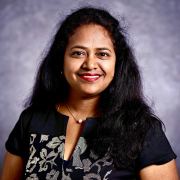
Dr Revathy Mani is a Lecturer & Education-focused Academic at the UNSW School of Optometry and Vision Science (SOVS). She is the current Program Coordinator for the BVisSci and Mcl in Optometry program. She is the recipient of the 2025 Educational Excellence Award from Faculty of Medicine and Health and 2024 SOVS Global Innovation Award. She serves as a Committee Member of American Academy of Optometry Fellowship panel. She served as an active member of SOVS EDI committee (2022-25). She co-supervises many PhD, Honours & Master research projects in the field of binocular vision, eye movements, traumatic brain injury and in Optometric Education.

Dr Lucy (Sae Rom) Jo is a Senior Educational Developer in the Faculty of Medicine and Health at UNSW Sydney. Trained as a molecular biologist, she has built a career spanning university teaching, curriculum design and educational innovation. Lucy has taught undergraduate science, designed and reviewed curricula across undergraduate and postgraduate programs, and collaborated with academics to create engaging, student-centred learning experiences. Her work focuses on evidence-informed teaching, authentic assessment, educational technology and the thoughtful integration of artificial intelligence to enhance learning. She is passionate about supporting both students and educators, and believes that meaningful learning occurs when curiosity, collaboration and inclusive teaching come together.
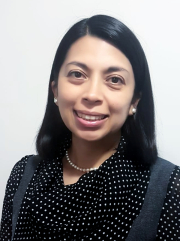
Dr Ingrid Jimenez Barbosa is an Academic at the UNSW School of Optometry and Vision Science (SOVS). She is recognised for her leadership in pedagogical innovation, including the development of interactive digital learning tools and gamified educational experiences showcased at international educational events. She is the recipient of the 2025 Saint John Baptist de La Salle Global Award for Excellence in Education and Research, one of the highest international distinctions granted by the International Lasallian network. She is also a Fellow of the American Academy of Optometry (FAAO). Her work spans curriculum quality, online program delivery, and educational innovation, alongside research collaborations in vision science, ageing, and neurotoxicity.